A photograph can happen in a fraction of a second.
A story may require hundreds of pages.
For a long time, I understood those as very different kinds of work.
Photography was visual.
Writing was narrative.
One preserved what could be seen.
The other explored what could be imagined, remembered, or felt.
Eventually that distinction became less convincing.
The more photographs I made and the more seriously I wrote, the more I realized that both were asking many of the same questions.
What happened here?
What almost happened?
What changed?
What remains?
What does a place remember?
Why does one particular moment stay with us while thousands of others disappear?
And perhaps most importantly:
What changes us before we know we have changed?
That is where photography and literature converge within Moorelight Studios.
They do not serve as separate businesses that happen to share a name.
They are two languages for exploring the same territory.
Photography begins with attention.
Before the shutter is released, something must first be noticed.
Light crossing water.
Weather gathering beyond a ridge.
The moment a reflection becomes more compelling than the object being reflected.
Distance.
Stillness.
Movement.
A landscape becoming something different without ceasing to be itself.
The photographer recognizes that something is happening and makes a decision:
Stay.
Watch.
Wait.
The photograph eventually records an instant, but the experience surrounding that instant is much larger than the frame.
There was weather before it.
There will be weather afterward.
There was a journey to that place.
There may be memory attached to it.
Someone standing beside the camera may be experiencing something entirely different.
The photograph preserves what was visible.
Literature can enter what remained invisible.
That distinction became increasingly important to me while writing The Moment Between.
Weather in the novel is not simply atmosphere.
Place is not background scenery.
Mountains, roads, water, storms, changing light, silence, and distance participate in the emotional world of the story because that is how I have experienced landscapes in life.
Places do something to us.
Sometimes we know it immediately.
Often we do not.
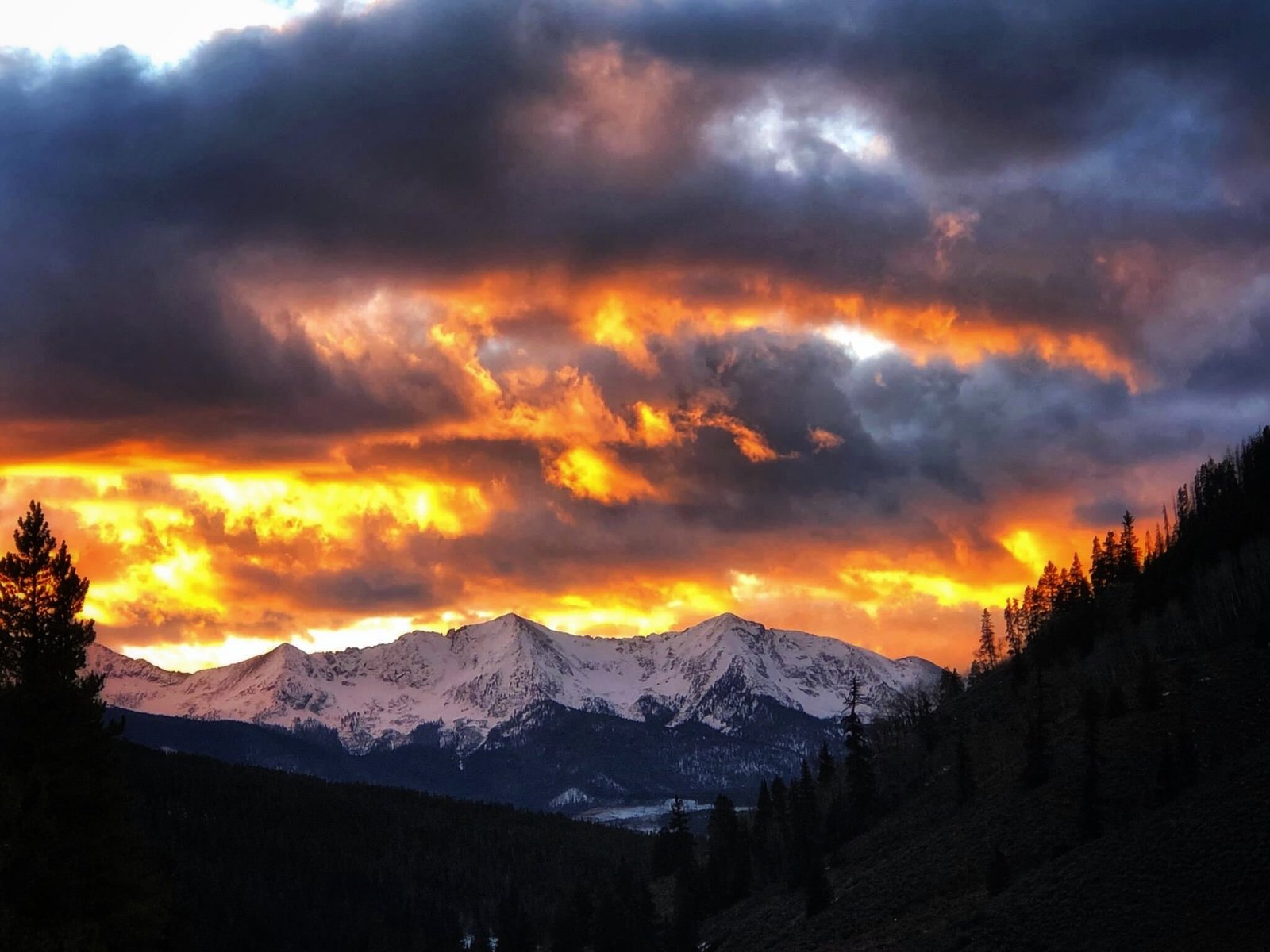
A photograph can show the storm gathering over the mountains.
A story can remain with the person standing beneath it.
What are they afraid of?
What have they lost?
What have they failed to say?
What are they becoming?
What will this place mean when they remember it years later?
Photography preserves the visible instant.
Literature can inhabit its duration.
One asks us to look.
The other asks us to remain.
Yet both can lead to Recognition.
This relationship explains why separating Convergence Fine Art from the literary work has never felt quite right to me.
They require different disciplines.
They produce different objects.
A limited-edition photograph hanging on a wall is not a novel.
A novel is not an exhibition.
But the work beneath them can belong to the same exploration.
A photograph may begin a story.
A story may change how we understand a photograph.
A landscape encountered first through fiction may later feel strangely familiar when seen in an image.
Someone may enter Moorelight Studios as a Reader and eventually encounter Convergence Fine Art.
Another person may begin as a Collector and later discover the books.
Neither path is secondary.
They are different entrances into the same creative world.
This matters because human experience itself does not organize neatly by medium.
We do not experience our lives as photography over here and literature over there.
We experience image, memory, language, Place, emotion, weather, relationship, loss, wonder, faith, uncertainty, and hope at the same time.
Meaning forms through their convergence.
The creative work should be allowed to do the same.
There is also something photography can teach writing.
Photography teaches restraint.
The frame cannot contain everything.
What is excluded matters.
The strongest image does not explain itself completely.
It leaves room for the person encountering it.
Writing benefits from the same discipline.
A story does not need to name every emotion.
A character does not need to understand everything that is happening to them.
Some truths become more powerful when the Reader is allowed to recognize them before the character does.
Literature, in return, teaches photography something about time.
A photograph can appear instantaneous, but the meaning of an image is rarely instantaneous.
We return to photographs.
Their meaning changes because we change.
An image made today may become important ten years from now for reasons the photographer could not possibly know.
Literature reminds us that every moment belongs to a larger narrative.
Before.
During.
After.
Memory.
Consequence.
Becoming.
Perhaps this is why I am drawn repeatedly to transitional landscapes.
Weather changing.
Light breaking through clouds.
Water holding one version of the sky while the sky itself becomes another.
Horizons.
Roads.
Dawn.
Dusk.
None of them represents a final state.
They exist between conditions.
They are visual expressions of Becoming.
Literature allows us to enter that same interval emotionally.
The person before the realization.
The relationship before the words.
The decision before certainty.
The life already changing before the person living it has learned to recognize what is happening.
That is the moment between.
It belongs to photography.
It belongs to literature.
It belongs to the larger Canon.
And it belongs to ordinary human experience.
The mediums are different.
The pursuit is the same.
To pay attention.
To preserve what matters.
To look again.
And sometimes, through an image or a sentence, to recognize something that had been quietly waiting for us to see it.
— Jordan S. Moore